
Why Euractiv is giving up a 25-year-old name
Conference Blog | 23 September 2026

On Monday, Euractiv will stop being Euractiv.
The Brussels-based EU policy news brand has carried the name for 25 years. Next week, it will reveal a new one in front of 400 people in Brussels, switch its domains, and launch a campaign across social media and out-of-home advertising.
The reason, Emmanuel Naert, head of product at Euractiv, told delegates in Madrid, is simple: “This name is not who we actually are.”
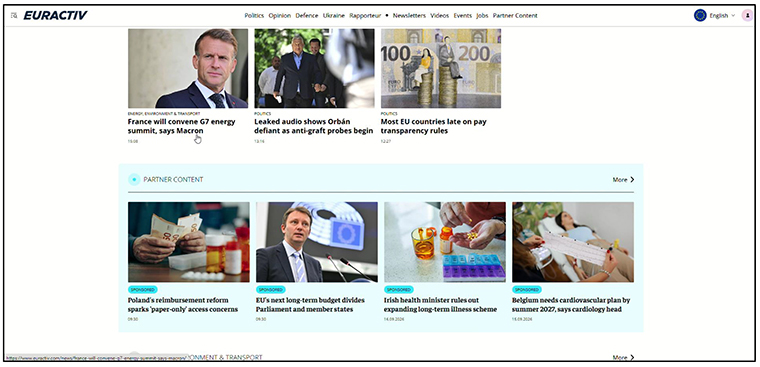
The session was part of INMA’s five-day Media Innovation Week, which includes a two-day study tour and the three-day European News Media Conference attended by 259 delegates in Madrid.
The rename is the last step in a three-year rebuild that began when Mediahuis acquired Euractiv in 2023.
“If you have lived through three years of transformation, you come to a point where you assess this name, this signpost that I have above my shop,” Naert said. “It no longer fits my identity.”
What the name stood for
Founder Christophe Leclerc launched Euractiv as a digital-only platform to promote the idea of European cohesion, when the EU had 15 member states. The project was, in Naert’s word, more “activistic” than journalistic.
For most of its life, Euractiv was “a free buffet”: no paywall, no registration, no data. Then Politico arrived in Brussels in 2015 — “an earthquake in the Brussels media world,” Naert said — with top reporters and a premium subscription model professionals were willing to pay for.
“This was a game that could not be won with the culture that existed” at Euractiv, he said. The founder recognised that and sold the company.
What the company became
What Mediahuis bought and what Euractiv is today are, in almost every sense, different organisations.
The people are different. Of the roughly 100 people who worked there in 2023, only eight remain. Replacements came from The Times of London, Politico, and Die Welt.
Keeping production going through that turnover was hard: “We have newsletters to fill, daily productions to give, leaks to bring, exclusive stories to publish,” Naert said.
Today, about 100 people from 24 countries, speaking 18 languages, share a 400-square-metre office behind the European Commission’s headquarters. When Belgian Prime Minister Bart De Wever was pressed at a late-night press conference by Euractiv reporter Thomas Moller-Nielsen, who is in his mid-30s, De Wever told the room: “These are the questions you all should have asked.”
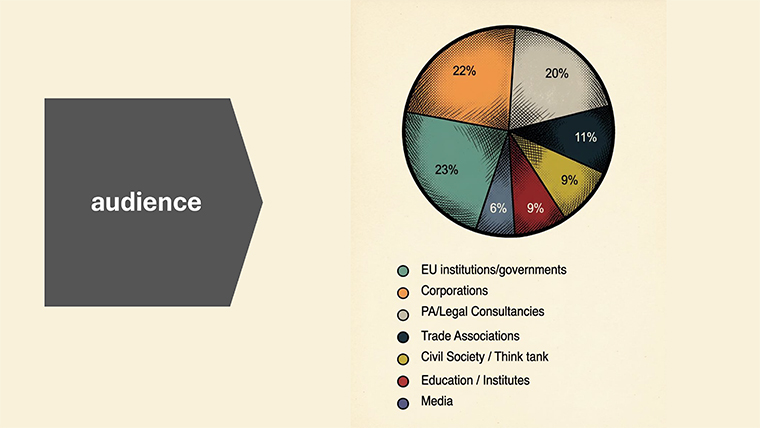
The audience is defined more sharply. Euractiv serves the people who move European policy: civil servants, politicians, and the roughly 3,000 associations, public affairs firms, NGOs, and think tanks trying to influence them. Its 20 newsletters, in three languages, have about 400,000 opt-ins.
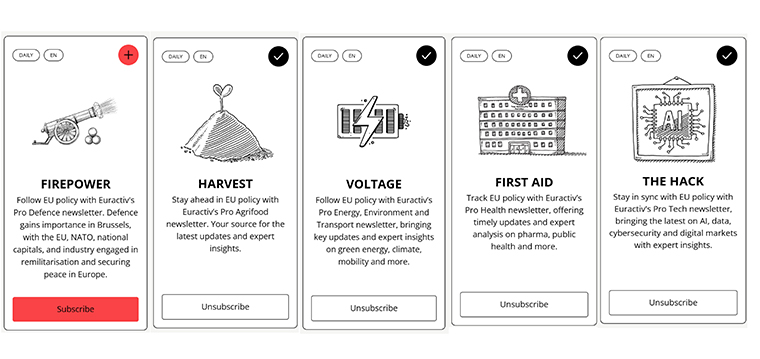
The business model is different. Web site sections became vertical subscriptions, each delivered through a branded newsletter such as Firepower for defence and Voltage for energy. There is no online checkout; a six-person sales team builds custom prices for each company. A bundle with an AI-enabled platform that summarises EU documents adds intelligence to the journalism. The events business, about 80 live and hybrid events a year, now includes briefings where subscribers question Euractiv journalists directly.
Even the metrics changed. Euractiv compares newsletter opens with deliveries for each account; when opens far outstrip deliveries, the newsletter is being forwarded, and the account manager should “pick up the phone.” The company is aiming for zero churn and plans to triple its roughly €7 million in revenue within five years.
“We will still be a small media company, but we will be a very healthy business altogether,” Naert said.
The infrastructure was rebuilt too: 25 years of legacy Web site code and a Salesforce system used as “a very expensive telephone book” gave way to Mediahuis group tools.
“We have turned into a professional journalistic operation,” Naert said. “We have started subscriptions. We are gaining an audience. We are renewing our products, reinventing events.”
How the rename came together
About 18 months ago, Euractiv began thinking about the change. It rewrote its mission statement, worked through a lengthy list of possible names, and built a new visual and brand identity. An SEO plan will guide the domain migration, and the reveal event in Brussels will be backed by a communication campaign.
Naert said he would have loved to reveal the name to a room full of media professionals in Madrid, but the timing did not allow it. Instead, he invited delegates to download the Euractiv app and look on Tuesday morning.
“How do you like the branding?” he asked. “If it sucks,” he added, let him know.
Related Articles
-

Why European news media leaders are betting on brand again
29 September 2026 -

7 themes from Madrid show publishers trading traffic for relati...
28 September 2026 -

Good Food turns cultural love of food into brand value
16 September 2026 -

Investment games surge at news companies, highlight audience pa...
16 July 2026 -

The destination is dead — here’s what replaces it
8 July 2026 -

Local broadcaster WPLG leaves ABC network affiliation, leans on...
3 June 2026 -

What we got wrong: a post-Berlin reckoning for the news media i...
17 May 2026 -

As AI passes the experimental phase, product and tech step into...
12 May 2026
Upcoming Events
-

Subscriber Acquisition Master Class
10-17 November 2026
-

Media Advertising Summit
New York, United States
07-10 December 2026
-

AI-Native News Product Master Class
18-25 February 2027
-

Media Subscriptions Summit
Oslo, Norway
08-12 March 2027
-

World Congress of News Media
New York, United States
25-30 April 2027
-

Branded Content & Partnerships Master Class
20-27 May 2027
-

Subscriber Retention Master Class
17-24 June 2027
-

Conferencia Latinoamericana
15-16 July 2027
-

South Asia News Media Festival
New Delhi, India
19-22 July 2027
-

Asia/Pacific News Media Summit
19-20 August 2027
-

CEO Roundtable at Kilkenny
Kilkenny, Ireland
24-26 August 2027
-

Media Innovation Week
Amsterdam, The Netherlands
27 September - 01 October 2027