
Journalists create agentic workflows at Bonnier
Newsroom Innovation Initiative Blog | 25 October 2026
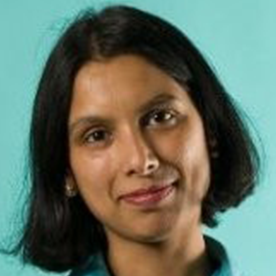
Moving from experiments to agentic workflows that journalists come up with is a tale of people, shared vision, and scale, said Marcus Ekdahl, editor-in-chief at Bonnier News’ Helsingborgs Dagbladin Sweden.
“This is not primarily a tech presentation. It’s about journalism, leadership, and organisation, and how we try to move fast without giving up our editorial responsibility,” Ekdahl told master class attendees.
The news brand has three staff at the forefront of their editorial AI work who train colleagues and develop tools. Still, AI is part of every employee’s goals.

Ekdahl said the line between the machine and the human is clear: AI tools find information, but the journalist makes sense of it: “Journalism begins and ends with people. AI changes what is possible in between.”
The team has used AI to do work that would not have been possible otherwise. For example, they have turned long political speeches and debates into searchable source material, making it possible to examine what politicians actually say.
The purpose: “To extend the newsroom’s ability to investigate, explain, and serve our readers … . The technology increased our capacity, but the journalists created the meaning, tested the evidence, and took responsibility for publication.”
Ekdahl showed attendees some of their agentic workflows, built by one of their journalists.
“Ideas that previously entered a long development queue can now become working prototypes in hours or days. A journalist can describe a well-defined problem, build an initial solution, test it with colleagues, and improve it immediately. That democratises development,” he pointed out.
But as more people build, the organisation realised it needed clearer ways to review security architecture, maintenance, and data handling. At Bonnier, a shared central structure approves tools and provides a secure environment, access controls, and professional review, as well as spreading best practices across the organisation.
Ekdahl cited four conditions for creating success:
Strong local solutions, built by those close to real newsroom problems.
Publishers who use the tools and understand their limits.
Protected time for specialist practitioners.
Central structures that make sharing safe and efficient.
Ekdahl also highlighted a gap many news brands need to address: “A great deal of attention has gone into developing tools for reporters or editors. That is reasonable, and in many newsrooms, they are now the people furthest ahead. But this creates a risk. The people expected to lead the transformation may be the ones who understand the tools least. Publishers and newsroom leaders need hands-on experience.”
If you’d like to subscribe to my bi-weekly newsletter, INMA members can do so here.
Banner photo: Adobe stock image by InfiniteFlow.
Related Articles
-

Marketers should outsource tasks, not thinking
25 October 2026 -

AI’s effect on super user math
15 September 2026 -

At Mediacorp’s CNA, loyalty means giving audiences a reason to ...
20 August 2026 -

Tribun Network turns print “dots” into AI-powered insight
20 August 2026 -

Nation Media Group focuses editorial strategy on stories that m...
4 August 2026 -

Briefly News empowers journalists with AI tool suite Nova
4 August 2026 -

Indian Express builds a video-first future around trusted journ...
20 July 2026 -

Grupo RBS builds social-first video operation to expand audienc...
20 July 2026
Upcoming Events
-

Subscriber Acquisition Master Class
10-17 November 2026
-

Media Advertising Summit
New York, United States
07-10 December 2026
-

AI-Native News Product Master Class
18-25 February 2027
-

Media Subscriptions Summit
Oslo, Norway
08-12 March 2027
-

World Congress of News Media
New York, United States
25-30 April 2027
-

Branded Content & Partnerships Master Class
20-27 May 2027
-

Subscriber Retention Master Class
17-24 June 2027
-

Conferencia Latinoamericana
15-16 July 2027
-

South Asia News Media Festival
New Delhi, India
19-22 July 2027
-

Asia/Pacific News Media Summit
19-20 August 2027
-

CEO Roundtable at Kilkenny
Kilkenny, Ireland
24-26 August 2027
-

Media Innovation Week
Amsterdam, The Netherlands
27 September - 01 October 2027